
Share Marideth Ann Sisco's obituary with others.
Invite friends and family to read the obituary and add memories.
Stay updated
We'll notify you when service details or new memories are added.
You're now following this obituary
We'll email you when there are updates.
Select your format and elements to print

IN LOVING MEMORY OF Marideth Ann Sisco
Marideth Ann
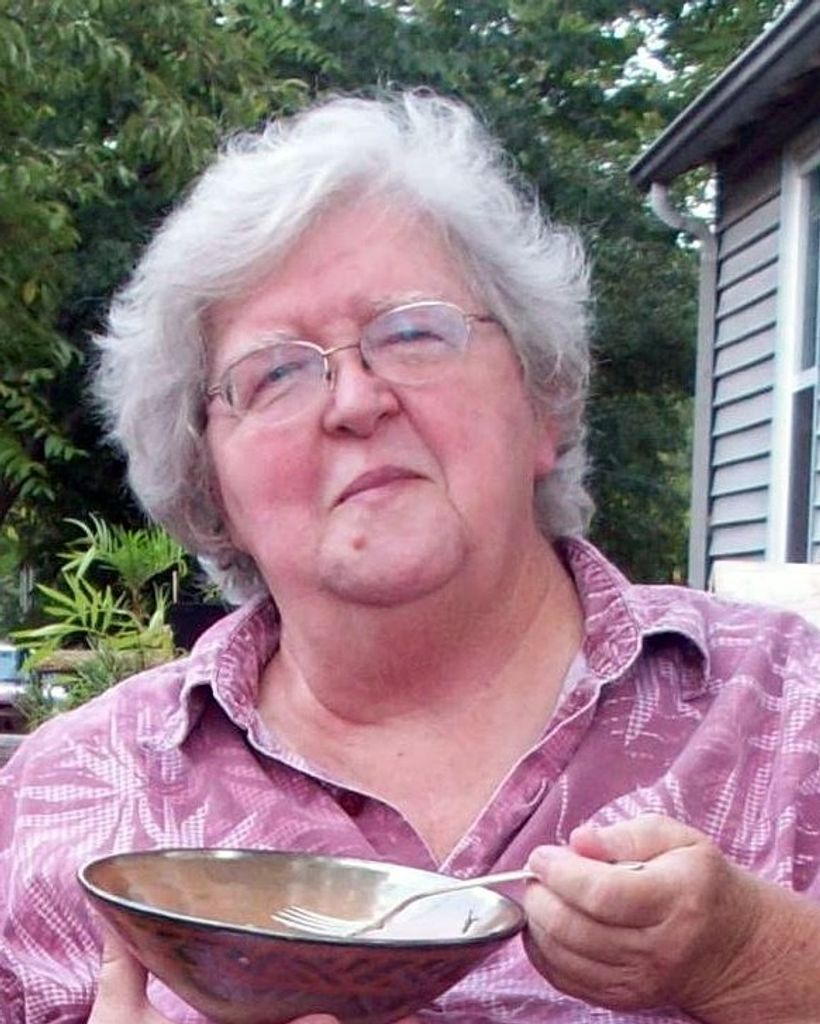
Sisco
Jun 15, 1943 — May 18, 2026
West Plains
Marideth Ann Sisco's Obituary
On a seasonably warm June day in Barry County, Missouri, in 1943, Marideth Ann Sisco was born to Marguerite Elenor (Gentry) and Paul Holtz Sisco. Perhaps strawberry season had ended by June 15 and the earth was heating up for summer, the grasshoppers and June bugs becoming common and noisy. Thus began the earthly life of the woman now known as a journalist, writer, singer, songwriter, folklorist, storyteller, gardener, and teacher. No matter where she ventured in the 82 years the fates allowed her, Butterfield was always home. Her roots there informed her whole life, from her love of gardening; to her knowledge, preservation, and performance of traditional music; to the deep insights and ways of speech that came to life in her writings.
Marideth left this mortal realm early in the morning of May 18, 2026. Many years of chronic health problems that might have early felled a less resilient person took their final toll. Beloved by many, she is sorely missed.
This then is a remembrance and tribute to Marideth and the complicated simple life she lived. She was so many things to so many people that certainly we each have our own stories, all of them no doubt true and fitting, though they may not match from one to another’s telling. Some of the best stories are those she gathered up and wrote down in her books, beginning with Close Enough to Home, running through her Crosspatch gardening column, and ending with her monthly public radio program, “These Ozark Hills,” which stories she had begun collecting into books. Marideth also told her stories through the music she played, the songs she sang, and the musicians and storytellers she encouraged. Marideth always had a story. You could count on it. Marideth claimed to have incredibly early memories. She remembered before she was born, she said, when she was sitting with her feet dangling in a pool of water before being sent to earth. Another early memory was of being an infant in her bassinet and hating the discomfort of a tight-necked baby shirt being pulled over her head. She never could stand to wear close-fitting necklines. Some of her T-shirts bore witness to that with a slash down through the front of the neckline. Her trademark woven shirts were open-necked Hawaiian and tropical prints, preferably with coconut shell buttons. Music was important to Marideth from an early age. She said that her public singing career began when she was three when she was at an auction where her great-uncle clerked. He stood her up on an ice cream freezer during a break in the sale and bade her sing for the folks in attendance. She sang “Far Away Places with Strange Sounding Names.” As we know, she never looked back. She sang her way through childhood and beyond, often singing in the car with her parents, sometimes learning made-up lyrics her parents sang as a joke, a joke she did not get until she was much older and was surprised to hear the real lyrics. Marideth spent her early years in Butterfield but began living a semi-nomadic life with her parents when she was about eight. Her parents left Butterfield and moved to go where there was work for her father; Marideth went with them. She changed schools many times as she lived in Kansas for a time, Montana in the winter where children sledded downhill on the reinforced backsides of their long coats, California near pecan groves, and Washington state where there was work in a defense plant. By her own count, Marideth attended nine different schools in seven years. As she got older, Marideth tired of moving and changing schools and returned to Butterfield to live with her Grammy. She completed high school in Cassville, graduating with the class of 1961. After a short stint at Northwest Missouri State University in Maryville, Marideth attended college at Southwest Missouri State College (now Missouri State University) where she studied music. It was during college, in 1963, when she landed her first paid singing gig. She was hired to sing folk songs at La Petite Lounge (The Pit) in Springfield. Her dreams were squashed hard when college personnel bluntly discouraged Marideth from her goal of preparing to work professionally in music performance, composition, and orchestration. She was told that, as a woman, she would not succeed in her chosen field, that there was no place for her in orchestration, and that she should consider changing her focus to music education. She left college without completing a degree and in 1965 left Missouri for California. Her first stop was San Francisco, where Marideth would meet others for dinner at Del Martin and Phyllis Lyon’s home. These gatherings with the Daughters of Bilitis were probably the first time she experienced being welcomed into a queer community of any size. She grew into herself in these years. She played music and sang whenever and wherever she could, trying to keep body and soul together with a variety of day jobs. Marideth left San Francisco for Santa Cruz and eventually moved to Los Angeles. Tragically, Marguerite and Paul Sisco died within four months of each other in 1966, leaving Marideth orphaned and adrift in her early twenties. She bought into a little bar in Santa Cruz with her inheritance and provided music and food for her patrons every night. The gig was good until she couldn’t keep the business going any longer. She didn’t keep the business, but she kept some lifelong friends.
After her parents’ deaths, Marideth’s closest family ties came to be with her Aunt Juanita and her husband Leonard who had moved to the Sacramento Valley sometime prior, along with Marideth’s parents. Juanita and Leonard remained in California after Marideth’s parents passed away and became anchors in Marideth’s life. Aunt Juanita was a loving stand-in for the mother Marideth no longer had and figured prominently in her life. In 1976, Juanita asked Marideth’s help to move back to Missouri. Leonard had fallen seriously ill and he and Juanita wanted to return home. Marideth agreed to help them, as family does, thinking that she would return to California after they got settled. The fates had something else in mind, however, and California’s loss was Missouri’s gain. Marideth stayed in Missouri for the rest of her life. Once her aunt and uncle were settled back home in southwest Missouri, Marideth lived and worked in the Springfield area. She helped Juanita and Leonard in many ways, including driving them back and forth to Leonard’s dialysis appointments. She eventually re-enrolled in Southwest Missouri State and completed a bachelor’s degree in photography and graphic arts with a minor in writing. It was during her fine arts degree work that Marideth took up working in glass. Some of her stained glass still exists in Springfield and southwest Missouri, and some of her etched glass graced the windows of the former student art space on Walnut Street. Those windows may still be there. A beautiful stained-glass door still fills the entrance of her Aunt Juanita’s former home in Aurora.
It was during her pre-graduation job search that Marideth connected with the West Plains Daily Quill. Upon graduation, Marideth and her partner packed up their things and moved to West Plains for Marideth to begin a journalism career that spanned 20 years. The pair had had enough of town-living in Springfield and rented in the country before buying a farm north of West Plains off 14 highway. Marideth worked at the Quill and her partner crafted pottery that is still treasured by many today. They were among the first openly lesbian couples to live in the area but did not hesitate to put down deep roots. They made strong connections with the locals, with the arts community, and with those who moved to the Ozarks in back-to-the-land migrations in the seventies and stayed. During these years, Marideth completed a Master of Fine Arts degree in creative writing at Antioch College. Her dissertation was the beginnings of a multivolume work still in progress at the time of Marideth’s death. Its working name was The Seed Mother. In the month before her passing, Marideth was pleased to have solved the problem of “what to do with the monkey” in her tale. Time may tell whether she got the resolution worked into her manuscript.
Marideth was active in the West Plains Arts Council for many years. She was a prime mover in the establishment of the ongoing Old Time Music/Ozark Heritage Festival which annually draws audiences from a multi-state area. She continued to sing and play with area musicians in groups that included Coyote and the Davis Creek Rounders. Thursday night jam sessions were a staple of her life. Indeed, it was in one of those Thursday night sessions that the seeds were planted for her later involvement in the movie project based on Daniel Woodrell’s Winter’s Bone. Life was full. There were classes to teach at Drury College and Missouri State University, columns to write, gardens to grow, journalism and humanities awards to win, and health to fight for. There were trips to take to Costa Rica for an environmental and educational journalism project and to Dauphin Island, Alabama, to learn all that was possible to learn about the island’s historic significance to indigenous women healers from all over the Americas. There were radio shows to write, edit, and record. Then came the nova that was “Winter’s Bone” and the film festivals and international travel that followed in its wake. Marideth relished her role as music consultant and featured singer, with her Blackberry Winter band, for the film. She loved being part of the movie creation process and learning how films are made. Marideth and the Blackberry Winter band undertook the memorable Amazing Geriatric Hillbilly US World Tour to showcase the music featured in the film. All those musicians collectively and individually released a number of CDs afterward. It was all a breathtaking, life-changing experience. When things died down, Marideth did not put up her feet or sit rocking on the front porch. She continued doing outreach events funded by the Missouri Arts Council (MAC) and Missouri Humanities. She and Blackberry Winter were on MAC’s touring performers roster for more than one season. More recently, she was recognized by the Missouri Folk Arts Program as a Master Storyteller and in that role, she mentored upcoming storytellers. She continued writing, encouraging traditional musicians, and gardening. She was still featured at music and literary events at the Yellow House Community Arts Center. It seemed that her life and growing legacy would never end.
Marideth is survived by a number of cousins who live in southwest Missouri and Oklahoma and by countless friends and fans across the county, the country, and the world.
She was preceded in death by her parents, beloved aunts and uncles--including her dear Aunt Juanita--and several cousins and close friends, including her former long- time partner and forever friend, Pat Hight.
There will be a celebration of life for Marideth on Tuesday, June 23, 2026, from 1:00 to 4:00 p.m. at the Langston Street Chapel of Robertson-Drago Funeral Home. Burial will be in the Mount Pleasant Cemetery in Butterfield, Missouri, at a later date. In lieu of flowers, memorial donations may be made to the Mount Pleasant Cemetery in Butterfield, Missouri, the West Plains Council on the Arts/Media Arts Center, or to any and may be left at or mailed to Robertson-Drago Funeral Home, 211 W. Main St., West Plains, Missouri.
Funeral Services for Marideth Ann Sisco
Celebration of Life

Tuesday
Langston Street Chapel of Robertson-Drago Funeral Home
1:00 - 4:00 pm (Central time)
Marideth Ann Sisco's Guestbook
Visits: 1986
This site is protected by reCAPTCHA and the
Google Privacy Policy and Terms of Service apply.
Service map data © OpenStreetMap contributors